Brand blueprint · No. 02
How a $3,500 side hustle became the matcha Louis Vuitton serves
Rocky Xu still has his 9-to-5, and that's the part that made the rest work.
Rocky Xu never quit his job. He kept his role at Beats by Dre, started with $3,500 at a friend's flea market, and built a matcha brand that Louis Vuitton, sacai and Byredo now serve at their events, with no café, no storefront and no lease. Here are the three moves he made, plus the numbers underneath them.
- $3,500
- his own money
- 2 yrs
- waiting on one farm
- 100K+
- orders placed
- 0
- storefronts
The three moves
- 01
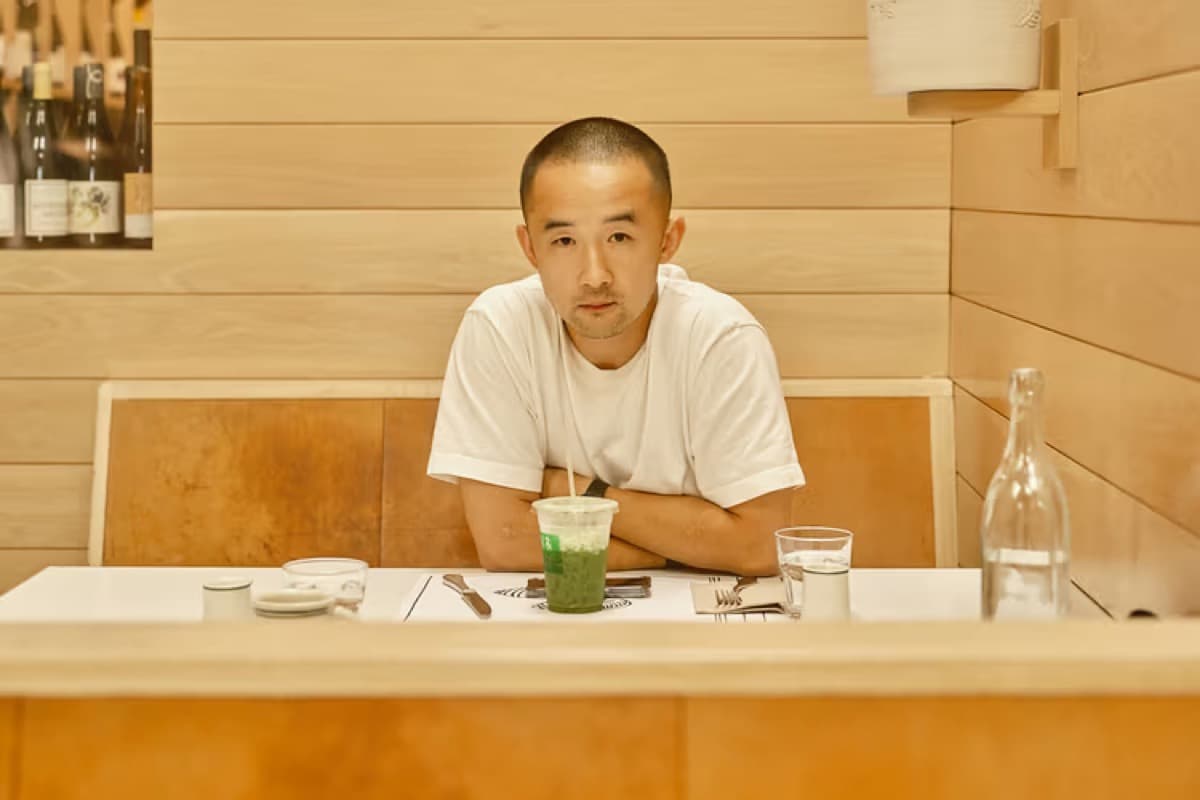
Photo: Hypebeast
Fund it · the anti-scale advantage
The salary is what let him wait two years
Keeping the corporate paycheck meant the brand never had to make money on a deadline. No rent to cover, no burn rate, no investor asking about Q3. That bought the one thing money usually can't: patience. He emailed a legendary Japanese producer and got nothing back for roughly two years. A funded founder can't wait that long, because the runway won't allow it, so they compromise and buy commodity powder from a broker. Rocky could just keep waiting. When the farm finally answered, it was because they'd watched how carefully he was building, and that's a thing you can only prove over time.
He wasn't slow because he was small. He could be patient because he was funded, by a job instead of a fund. Same protection, no cap table.
- 02
Sell it · turn no lease into scarcity
He chose pop-ups over a café, on purpose
A café in Los Angeles means a lease, a build-out, staff standing around on a slow Tuesday and a fixed cost that has to be fed every single month. He made the brand nomadic instead: pop-ups that appear, sell out and disappear. The mechanic underneath that is worth sitting with. A storefront is always there, so there is never a reason to go today. A pop-up you might miss turns every appearance into an event people rearrange their day around, post about, and line up for. Scarcity is the thing luxury brands spend millions manufacturing. He got it free, as a side effect of being too cheap to sign a lease.
Watch what this does to the content: a permanent shop generates one post ever. A traveling one generates a fresh wave of posts in every city it lands in, made by other people, for free.
- 03
Position it · borrow the room you want to be in
He skipped the wellness playbook entirely
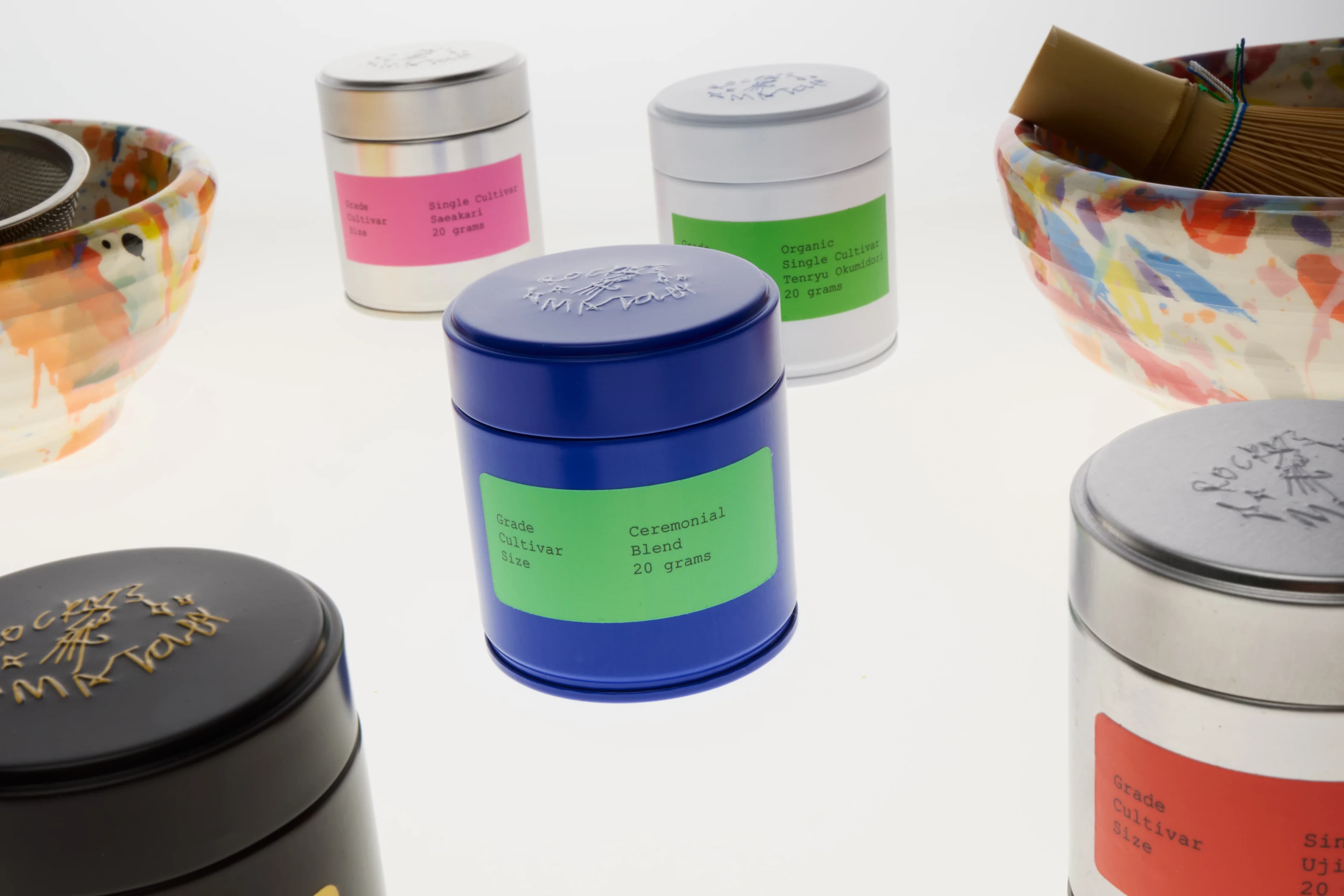
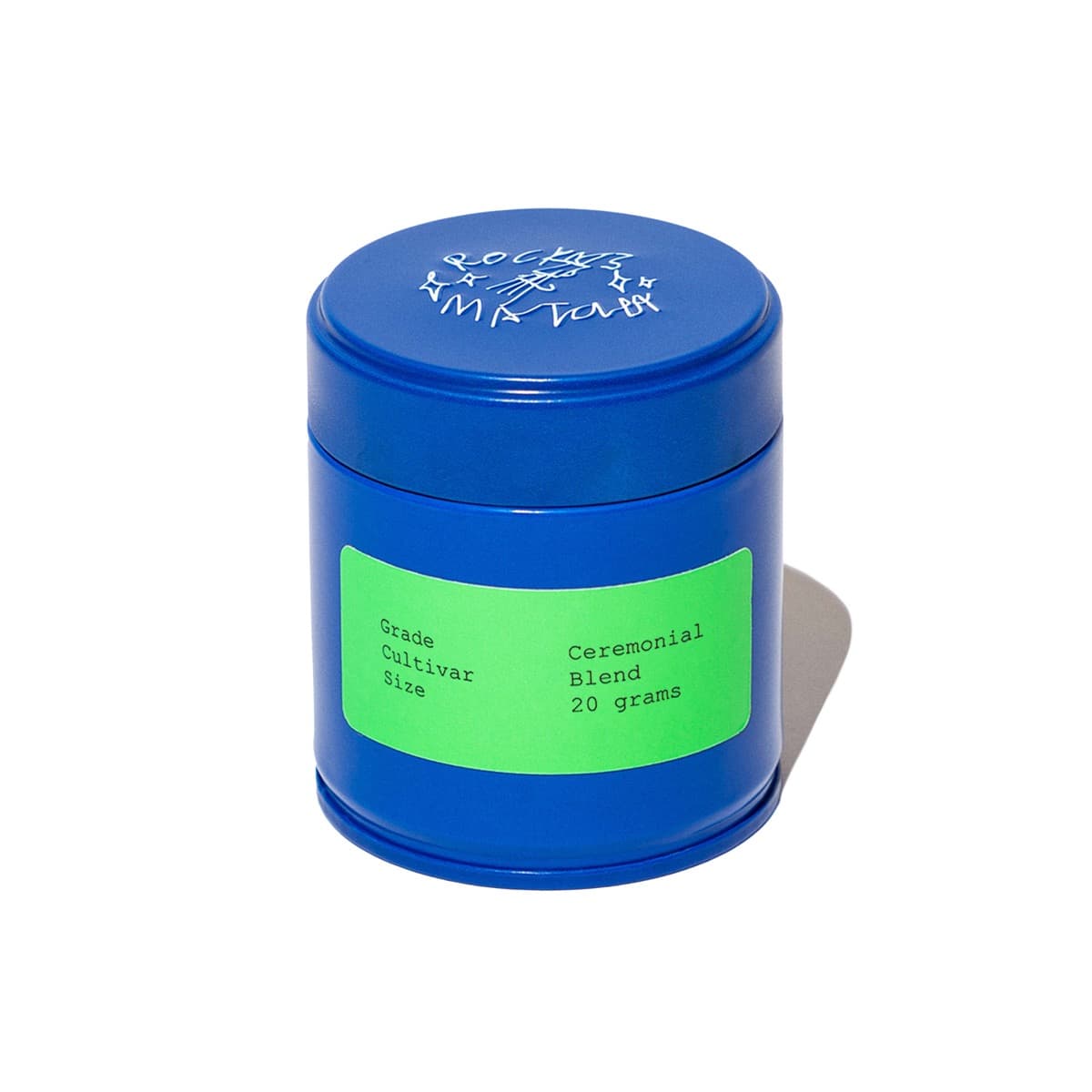
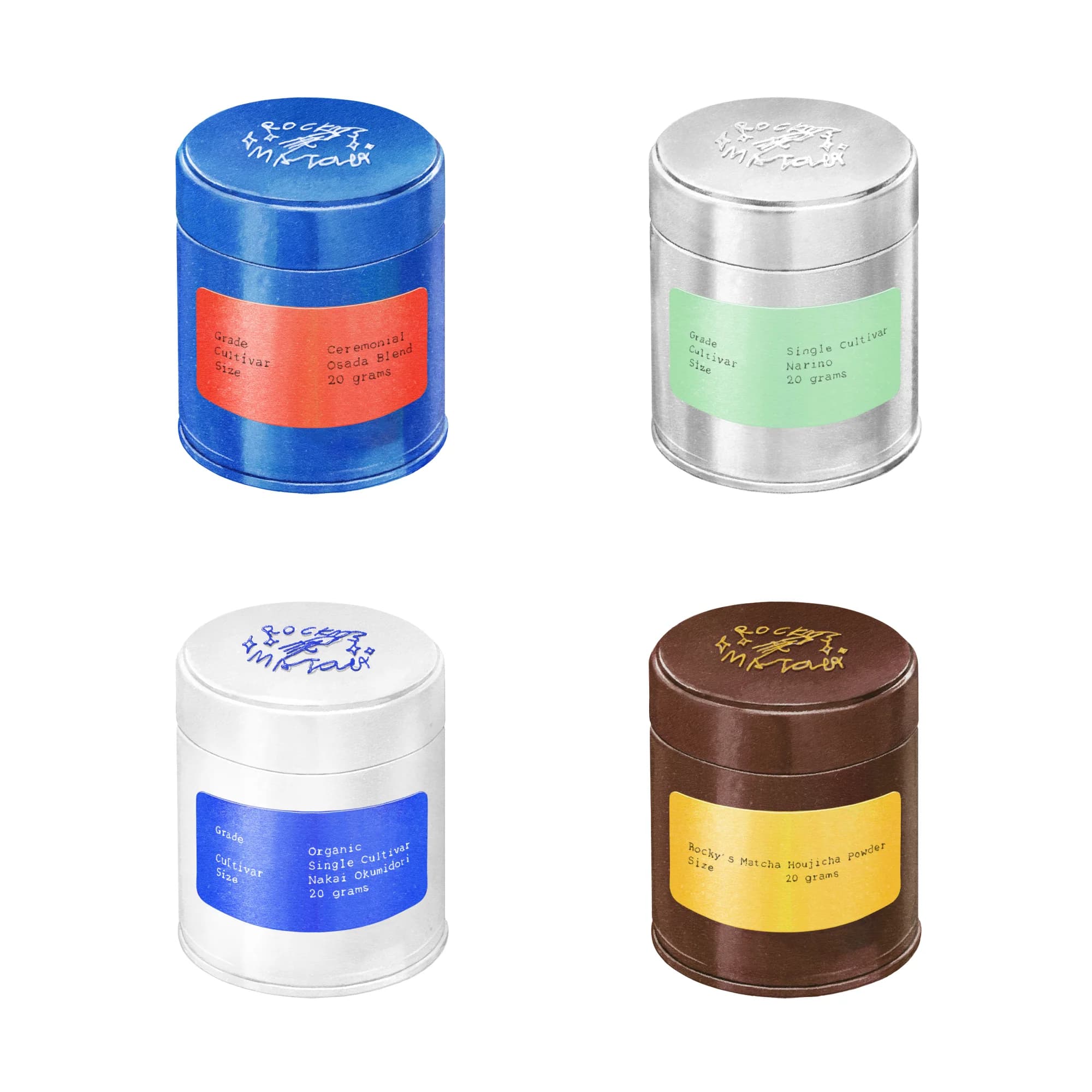
No smoothie-bowl influencers, no 15%-off codes, no supplement-aisle language. He took the pop-ups to the fashion crowd instead: Art Basel Miami, Milan Design Week, Paris Fashion Week, a Stone Island store, collaborations with Byredo, sacai, Ghetto Gastro and Awake NY. Even the tin plays the game. Every matcha on earth is sage-green and zen, so his is bright blue, and it's the one your eye catches in someone else's shelf photo. Stand next to the giants long enough and the association does the positioning for you. A traditional Japanese beverage becomes a status object.
Discount codes tell people your product is worth less than the sticker. A Paris Fashion Week pop-up tells them it's worth more. Same spend, opposite signal.
The part the video cut
The farms are the actual moat
Named producers, not a white-label supplier
Most "founder-led" matcha brands are a logo on someone else's bulk powder. Rocky's is sold by producer, the way wine is sold by estate, which is why a competitor can't simply reorder the same thing.
- Horii Shichimeien · Uji, Kyoto
- Founded 1879. The kind of multi-generation house that decides who it sells to, which is exactly why the emails went unanswered for so long.
- Sugimoto · Kagoshima
- Family-run, producing since 1946. Organic, single-cultivar, first-harvest leaves from one farm, a level of traceability most brands can't name.
- Kogacha Gyo · Yame, Fukuoka
- Fourth-generation growers in one of Japan's most decorated matcha regions.
Steal this: pick a supplier whose name adds credibility to yours, then put their name on the front of the package. You're not just buying an ingredient, you're renting a reputation that took 150 years to build.
The timeline, honestly
The idea and the business are two years apart
Summer 2020: a shaman in Topanga puts him on a 21-day chakra cleanse and tells him to give up coffee for good, because of what its peaks and valleys were doing to his energy. He'd been on two to three cups a day. It took until 2022 for that to become a brand, when his friend Pedro Cavaliere (of Community Goods) offered him a table at a vintage flea market. The overnight success took two years of research first.
The money is less romantic than the myth
Bootstrapped, then quietly capitalized
It started with $3,500 of his own money. It did not stay a solo, unfunded project. He later took family investment and brought in a minority partner, and now runs part-time staff and a warehouse for e-commerce. He still doesn't pay himself, income goes back into the business, and he still keeps the job partly for health insurance. That's the unglamorous mechanic under "never had to sell out": his living costs and the brand's costs sit on two separate balance sheets.
If you're building on the side, this is the number that matters most. Not revenue, but how many months you could go with zero sales before you'd be forced to take a bad deal.
The search-term flywheel
One café did the work of an ad budget
Curating the matcha program at Community Goods put the product in front of exactly the right people, and they went home and typed "Community Goods matcha" into a search bar. He didn't have to build demand for his own name first. He attached it to a place that already had demand, and let the searches find him. From there it spread to Sqirl, Jon & Vinny's, Courage Bagels, Cookbook Market, Café Telegrama, Sua Superette and the CAA office cafeteria.
Steal this: your first distribution partner shouldn't be the biggest one. It should be the one whose customers are already the customers you want, and whose name people already type into a search bar.
The unit economics
Priced as an object, not a grocery item
$28 for a 20g tin, roughly a dollar-something a bowl, positioned closer to a fragrance than to a pantry staple. And the growth curve was not a hockey stick. It went from one order every few days at the start to 20 or 30 orders a day, on the way past 100,000 orders total. Boring, compounding, and entirely survivable when nobody's salary depends on it.
The 10-to-4 rule
How he actually runs two jobs
He holds a demanding full-time role in brand partnerships, so the matcha work is calendar-blocked around it, with app restrictions during core hours and vacation days spent on pop-ups. Everything lives in a calendar and a checklist. The system isn't discipline as a personality trait. It's that a side business with no protected hours quietly becomes a hobby.
Steal this at your size
- 01
Price your patience
Before you quit anything, work out your no-desperation number: how many months of personal expenses you have covered without the business earning. That figure is what decides whether you get to wait two years for the right supplier, or have to take whichever one answers first.
- 02
Make it miss-able
If you're launching something, resist the always-on storefront instinct. A limited drop, a one-weekend pop-up, a run of 200. The constraint isn't just cheaper, it manufactures the urgency you'd otherwise have to buy with ads.
- 03
Pick the wrong color on purpose
Go and look at the shelf your product will sit on, screenshot it, and pick the color that isn't there. Blue in a green category. The goal isn't taste, it's being identifiable in a photo someone else took.
- 04
Borrow credibility before you build it
One partner whose room you want to be in beats ten who'll take anyone. Ask what you can give them, a better product for their customers or a reason for people to visit, rather than what they can do for your reach.
The takeaway
Patient capital, engineered scarcity, borrowed credibility. The 9-to-5 is the reason he never had to be in a hurry about any of it.